Myths about egg protein
Quite a few beliefs have accumulated around egg protein — from «raw eggs are absorbed best» to «egg white is in no way inferior to whey». Some of them are based on outdated notions, some on marketing. Our editorial team took the seven most common claims and checked them against the scientific literature.
Myth 1: raw eggs are the best protein source
The image of an athlete drinking a glass of raw eggs became entrenched in mass culture thanks to cinema. The logic of the myth is simple: supposedly heating «destroys» the protein, so the raw product is better. In reality, the data indicate the opposite.
In a study by Evenepoel et al. (1998), published in the Journal of Nutrition, the digestibility of egg protein was measured using stable isotopes. Protein absorption from a cooked egg was about 91%, whereas from a raw one — only about 51%. Heating unfolds the protein molecules and makes them more accessible to digestive enzymes, and also inactivates the trypsin inhibitors present in raw egg white.
There are other arguments against raw eggs as well. Raw egg white contains avidin — a protein that firmly binds the vitamin biotin. Regular consumption of large amounts of raw whites can theoretically impair biotin absorption. In addition, raw eggs carry a risk of salmonella infection.
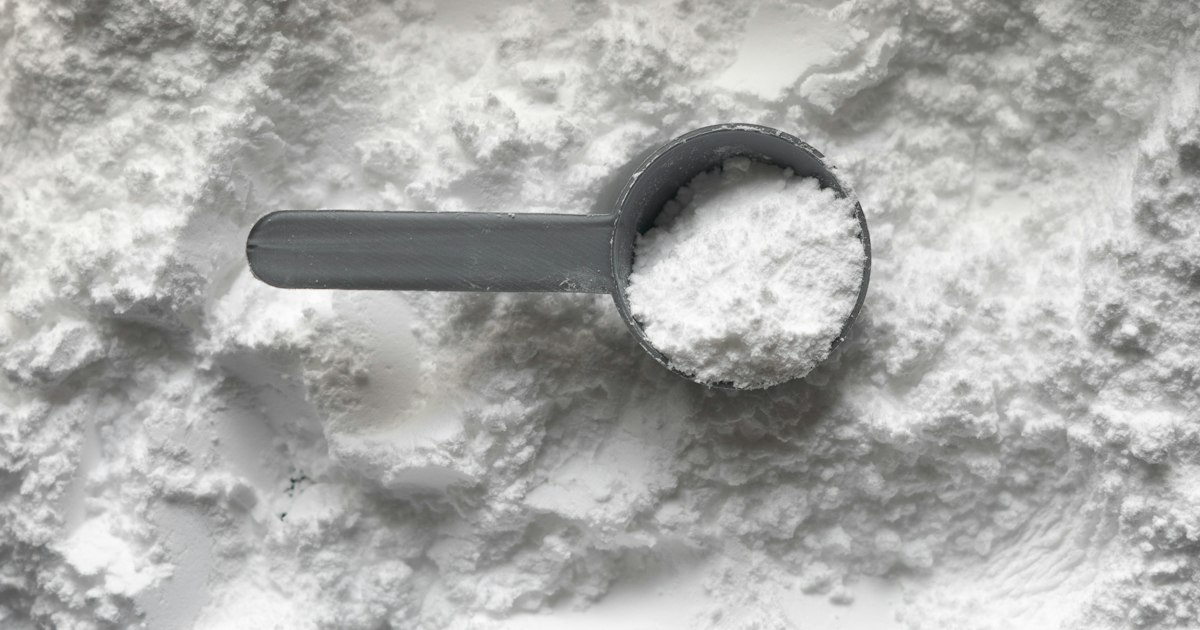
Egg white powder for sports nutrition undergoes pasteurization and drying with heating. Therefore, in terms of digestibility it is closer to a cooked egg than to a raw one, and is microbiologically safer. The myth is refuted.
Myth 2: egg protein raises cholesterol
This myth confuses two parts of the egg. Cholesterol in an egg is concentrated in the yolk, and the white part contains practically none of it. Egg white powder, which is sold as a sports supplement, is made specifically from the white, so it has minimal cholesterol.
Whole egg powder is another matter. It contains the yolk, and therefore fat and cholesterol. People with lipid metabolism disorders whom a doctor has advised to limit cholesterol in the diet should pay attention to exactly which form they are buying.
It is also worth noting that the effect of dietary cholesterol on blood cholesterol levels in most people is more moderate than was believed several decades ago, and varies greatly between individuals. However, this concerns whole eggs, not egg protein, which is not a significant source of cholesterol anyway.
Conclusion: for egg white powder the claim is false. For whole egg powder it is partly valid and depends on the individual situation.

Myth 3: egg protein is equivalent to whey in everything
Some sellers spread the opposite myth: that egg protein is supposedly in no way inferior to whey. The truth, as always, is in the middle. Egg white is complete, with high digestibility, and in the classic study by Moore et al. (2009) it was egg protein that was used to determine the dose-dependent effect: in young men, about 20 g of protein after resistance training provided nearly maximal stimulation of muscle protein synthesis.
At the same time, whey contains more leucine — the amino acid that plays the role of a signal to trigger muscle protein synthesis — and is digested faster. Therefore, in acute post-workout studies whey often gives a slightly higher short-term peak of protein synthesis.
Does this matter in the long term? A meta-analysis by Morton et al. (2018) showed that the main role in muscle mass gain is played by the total daily amount of protein, and differences between sources with sufficient intake are less significant. That is, for most people egg protein is a fully complete alternative, though not «identical» to whey.
| Claim | Verdict | Brief explanation |
|---|---|---|
| Raw eggs are absorbed better | False | Cooked white is absorbed much better |
| Egg protein raises cholesterol | False for the white | Cholesterol is in the yolk |
| Egg = whey in everything | Partly | Complete, but less leucine and slower |
| Only 30 g is absorbed at a time | Oversimplification | Everything is absorbed, the question is the effect on muscles |
| Protein harms the kidneys | False for healthy people | Restrictions are relevant in CKD |
| Powder is «chemistry» | False | It is dried pasteurized egg white |
| The yolk should be discarded | Debatable | Whole eggs may be even more effective |
Myths 4–7: absorption, kidneys, «chemistry» and the yolk
Myth 4: «No more than 30 g of protein is absorbed per intake».The gut absorbs practically all the protein consumed; with a large portion this process simply takes longer. The question is not about absorption, but about what share of the amino acids goes to muscle protein synthesis. A review by Schoenfeld and Aragon (2018) concluded that to maximize anabolism it is advisable to distribute protein across several intakes of about 0.4 g/kg of body weight, but larger portions are not «wasted».
Myth 5: «Protein destroys the kidneys».In people with healthy kidneys, moderately high protein intake does not cause damage to them, as noted in the ISSN position on protein and exercise (2017). Protein restriction is justified for patients with chronic kidney disease, and in that case the decision is made by a nephrologist.
Myth 6: «Protein powder is synthetic chemistry».Egg white powder is dried pasteurized egg white. Additional ingredients (flavorings, sweeteners, thickeners) depend on the specific product and are indicated on the label. If you want a minimal composition, choose an unflavored option.
Myth 7: «The yolk is harmful, you should eat only the whites».A study by van Vliet et al. (2017) showed that after resistance training whole eggs stimulated muscle protein synthesis more strongly than an isonitrogenous amount of egg whites. The yolk contains fats, vitamins and other nutrients that may influence the anabolic response. This does not mean that the protein in powder is bad — only that the yolk should not be demonized.
What is actually worth knowing
After examining the myths, a few verified facts remain that are worth relying on when choosing and using egg protein.
- Egg white is a complete protein source with all the essential amino acids.
- Thermally processed protein is absorbed better than raw; the powder undergoes pasteurization.
- Egg white powder contains no lactose and practically no cholesterol.
- The key to the result is a sufficient total amount of protein per day and regular training.
- Egg allergy is an absolute contraindication regardless of the form of the product.
The ISSN position (2017) orients physically active people toward a total intake of 1.4–2.0 g of protein per kilogram of body weight per day. A protein supplement is a convenient way to cover part of this requirement, but not a replacement for a complete diet.
It is also worth remembering that marketing promises like «the purest protein» or «perfect absorption» have no clear criteria. It is better to look at specific figures: protein content per 100 g, composition, the presence of independent testing.
For people who poorly tolerate dairy products, egg protein remains one of the most convenient animal alternatives. For vegans it is, of course, not suitable — in that case it is worth considering plant proteins.
Editorial conclusions
Most common myths about egg protein do not hold up to scrutiny. Raw eggs are absorbed worse than cooked ones; egg white powder does not raise cholesterol; in healthy people protein does not harm the kidneys.
At the same time, one should not fall into the other extreme: egg protein is not an exact copy of whey, although within a sufficient total protein intake this difference is insignificant for most people.
Rely on research data, the product's composition and your own goals, not on loud advertising slogans.
We also recommend reading our articles «Egg protein: product forms and which to choose», «What to combine egg protein with» and «Pea protein: what it is and how it works».
References
- Evenepoel P, Geypens B, Luypaerts A, et al. Digestibility of cooked and raw egg protein in humans as assessed by stable isotope techniques. J Nutr. 1998;128(10):1716–1722.
- Moore DR, Robinson MJ, Fry JL, et al. Ingested protein dose response of muscle and albumin protein synthesis after resistance exercise in young men. Am J Clin Nutr. 2009;89(1):161–168.
- Morton RW, Murphy KT, McKellar SR, et al. A systematic review, meta-analysis and meta-regression of the effect of protein supplementation on resistance training-induced gains in muscle mass and strength in healthy adults. Br J Sports Med. 2018;52(6):376–384.
- Schoenfeld BJ, Aragon AA. How much protein can the body use in a single meal for muscle-building? Implications for daily protein distribution. J Int Soc Sports Nutr. 2018;15:10.
- van Vliet S, Shy EL, Abou Sawan S, et al. Consumption of whole eggs promotes greater stimulation of postexercise muscle protein synthesis than consumption of isonitrogenous amounts of egg whites in young men. Am J Clin Nutr. 2017;106(6):1401–1412.
- Jäger R, Kerksick CM, Campbell BI, et al. International Society of Sports Nutrition position stand: protein and exercise. J Int Soc Sports Nutr. 2017;14:20.
Andriy Melnyk
A strength-sports coach and author of programs for beginner and intermediate levels. Writes about training planning.