How to take pea protein: dosage, timing, duration
Pea protein is an ordinary dietary supplement, so there are no «cycles» or complex schemes here. However, a few simple decisions — how much protein you need per day, what portion to take, when to drink it — noticeably affect the result. Our editorial team gathered practical recommendations based on the positions of sports nutrition organizations and research.
How much protein you need per day
Before talking about the supplement, it is worth determining the overall protein requirement. The position of the International Society of Sports Nutrition (Jäger et al., 2017) recommends 1.4–2.0 g of protein per kilogram of body weight per day for physically active people. For a person weighing 75 kg this is approximately 105–150 g of protein per day.
The meta-analysis by Morton et al. (2018) showed that the benefit of increasing protein for lean mass gain during resistance training on average stops increasing at approximately 1.6 g/kg per day, although the upper bound of the confidence interval reached about 2.2 g/kg. So for most people a reasonable goal is 1.6–2.0 g/kg.
Pea protein only complements the diet. First calculate how much protein you get from food, and then determine how much is lacking. If your regular diet already provides 1.6 g/kg, a supplement is not mandatory — it is a matter of convenience, not necessity.
Vegans and vegetarians should aim for the upper part of the range. Plant proteins on average have somewhat lower digestibility and less leucine, so a small «buffer» in the total amount helps compensate for these differences (Pinckaers et al., 2021).
Pea protein portion size
For stimulating muscle protein synthesis, not only the daily intake matters, but also the amount of protein in a single intake. The review by Schoenfeld and Aragon (2018) suggests aiming for about 0.4 g of protein per kilogram of body weight per intake, distributing protein over at least four intakes per day.
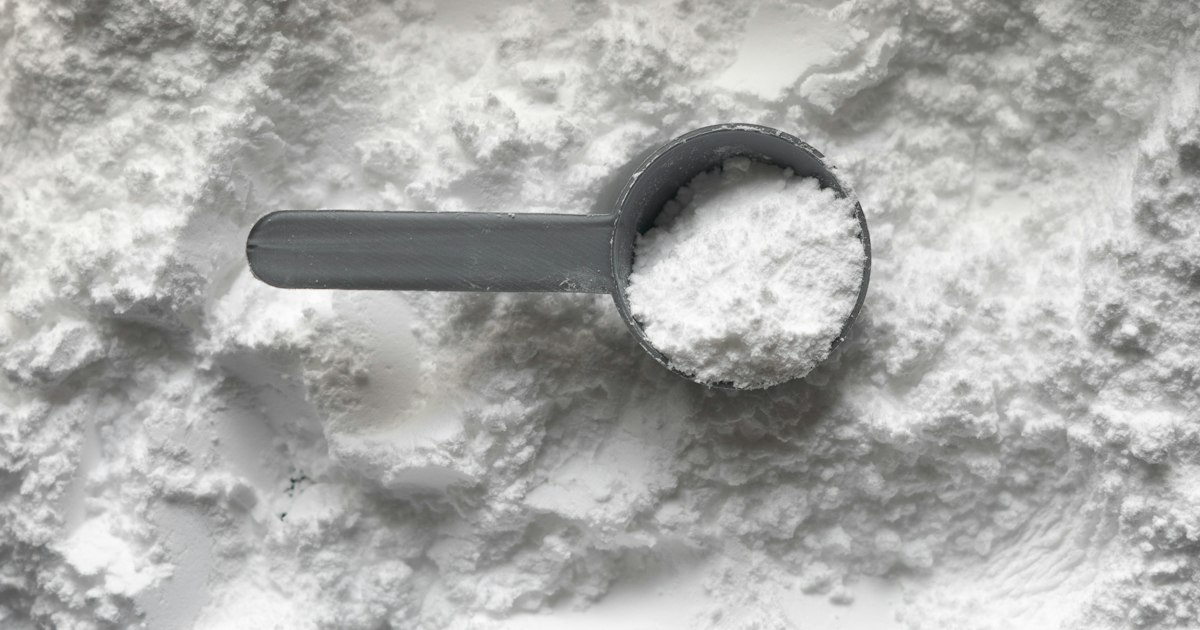
For pea protein, in which there is somewhat less leucine than in whey, it is logical to take a portion no smaller than for whey, and if needed slightly larger. In practice, for an adult this is usually 25–40 g of pea protein per intake, i.e. one to one and a half scoops depending on the product. In the study by Babault et al. (2015) participants received 25 g twice a day.
| Body weight | Protein per intake (~0.4 g/kg) | Daily goal (1.6–2.0 g/kg) |
|---|---|---|
| 55 kg | ~22 g | ~88–110 g |
| 70 kg | ~28 g | ~112–140 g |
| 85 kg | ~34 g | ~136–170 g |
| 100 kg | ~40 g | ~160–200 g |
Note: this is about the amount of protein, not powder. If 30 g of powder contains 24 g of protein, then to get 30 g of protein you will need about 37–38 g of powder. Always check the protein content per serving on the label.
Older people usually need larger portions of protein for the same anabolic response, since the sensitivity of muscles to amino acids decreases with age. For them it is especially important not to «under-dose» plant protein.
When to take it: workout, morning, evening
The ISSN position on nutrient timing (Kerksick et al., 2017) concluded that the total amount of protein per day is more important than the exact timing of intake. The notion of a narrow «anabolic window» of 30 minutes after a workout is considered an exaggeration, although taking protein within a few hours before and after exercise is a reasonable strategy.
In practice, pea protein is convenient to use at the following moments:
- After a workout— if it is more than 1–2 hours until the next full meal.
- For breakfast— when the usual breakfast is low in protein (porridge, toast, fruit).
- As a snack between meals— for an even distribution of protein throughout the day.
- In the evening— if the daily protein norm has not yet been reached.
A study by Areta et al. (2013) showed that during a 12-hour recovery after resistance training, four intakes of 20 g of protein (whey) every 3 hours stimulated myofibrillar protein synthesis more effectively than two large or eight small intakes. Although the study was conducted with whey, the principle of even distribution applies to plant proteins as well.
Duration of use and breaks
Pea protein is a dietary protein, not a pharmacological substance. The body does not get used to it, the receptors do not «tire», so there is no physiological need to take breaks or courses. The supplement can be consumed for as long as it is needed to reach the daily protein norm.
The first results from increasing protein intake in combination with training are usually assessed no earlier than after 8–12 weeks — this was precisely the duration of most studies. Changes in muscle mass happen slowly, and they are hard to notice over a few weeks.
At the same time, it is worth periodically reviewing the diet. If you have started eating more protein products — legumes, tofu, dairy products, meat or fish — the need for the supplement may decrease. And conversely, during intense training or a calorie deficit the protein requirement increases.
For people on a long-term calorie deficit (cutting, weight loss), protein is especially important for preserving muscle mass. During this period pea protein helps maintain a high protein intake at a relatively low calorie content.
How to prepare it and typical mistakes
Pea protein is best mixed in a shaker or blender with cold water, plant or regular milk. It dissolves somewhat worse than whey and can give a slight «graininess», so it is worth shaking more thoroughly or adding a little more liquid.
The powder is well suited for smoothies with fruit and berries, oatmeal, pancakes and baking. Heating does not reduce the nutritional value of the protein, so it can be used in cooking.
Typical mistakes when using pea protein:
- too small a portion, calculated «as for whey» without accounting for the protein content in the powder;
- all the protein in one or two intakes instead of even distribution;
- using protein instead of a full diet rather than in addition to it;
- an abrupt start with large portions, which increases the risk of bloating.
If pea protein causes discomfort, start with half a portion and gradually increase the amount over a week. It is also worth choosing an isolate with a short ingredient list without sugar alcohols.
Editorial conclusions
Aim for a total protein intake of 1.6–2.0 g/kg of body weight per day, and use pea protein to fill gaps in the diet.
A portion of about 0.4 g of protein per kilogram of body weight (usually 25–40 g of protein) 1–2 times a day is a reasonable starting point. The timing of intake matters less than regularity and even distribution of protein throughout the day.
Pea protein does not require courses and breaks — consume it for as long as it is needed to achieve your goals.
We also recommend reading our articles «The benefits of pea protein for athletes: the evidence base», «Side effects of pea protein» and «What to combine egg protein with».
References
- Jäger R, Kerksick CM, Campbell BI, et al. International Society of Sports Nutrition position stand: protein and exercise. J Int Soc Sports Nutr. 2017;14:20.
- Kerksick CM, Arent S, Schoenfeld BJ, et al. International Society of Sports Nutrition position stand: nutrient timing. J Int Soc Sports Nutr. 2017;14:33.
- Schoenfeld BJ, Aragon AA. How much protein can the body use in a single meal for muscle-building? Implications for daily protein distribution. J Int Soc Sports Nutr. 2018;15:10.
- Morton RW, Murphy KT, McKellar SR, et al. A systematic review, meta-analysis and meta-regression of the effect of protein supplementation on resistance training-induced gains in muscle mass and strength in healthy adults. Br J Sports Med. 2018;52(6):376–384.
- Areta JL, Burke LM, Ross ML, et al. Timing and distribution of protein ingestion during prolonged recovery from resistance exercise alters myofibrillar protein synthesis. J Physiol. 2013;591(9):2319–2331.
- Babault N, Païzis C, Deley G, et al. Pea proteins oral supplementation promotes muscle thickness gains during resistance training: a double-blind, randomized, placebo-controlled clinical trial vs. whey protein. J Int Soc Sports Nutr. 2015;12(1):3.
- Pinckaers PJM, Trommelen J, Snijders T, van Loon LJC. The anabolic response to plant-based protein ingestion. Sports Med. 2021;51(Suppl 1):59–74.
Andriy Melnyk
A strength-sports coach and author of programs for beginner and intermediate levels. Writes about training planning.